

Why Ants Are Choosing Your Car
Ants do not randomly swarm vehicles; they are seeking specific resources, often driven into cars by extreme weather (such as heavy Florida rains flooding their underground nests) or drawn in by scent.
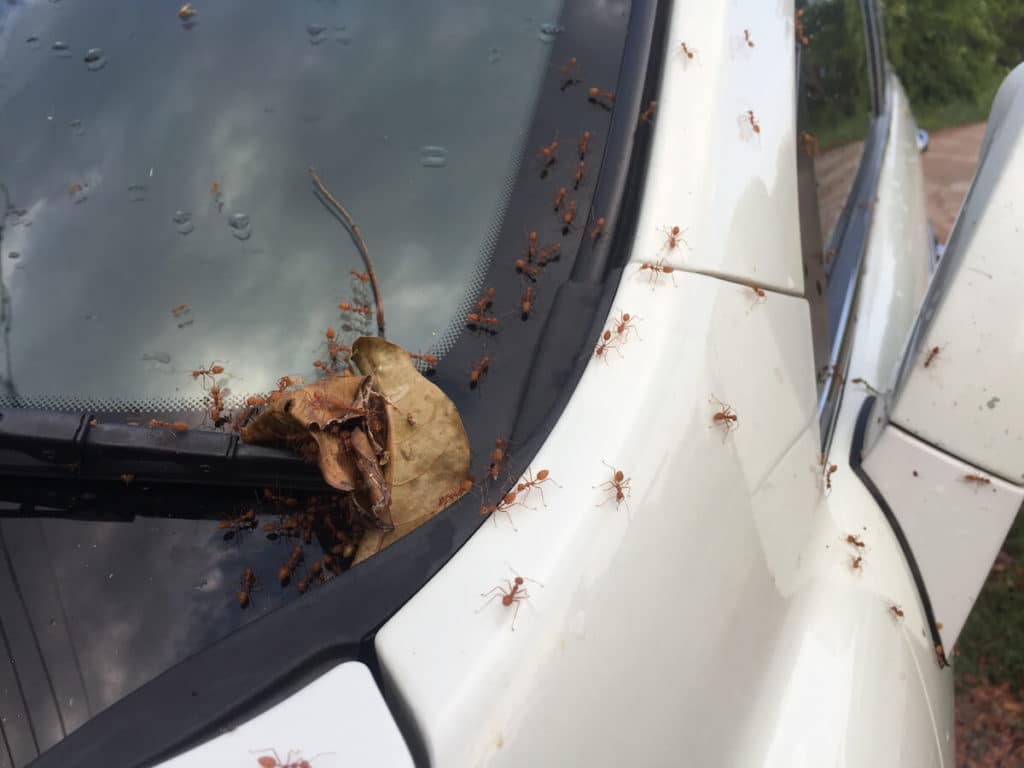
- The Tree as a Launchpad: Where branches physically touch a vehicle or a car is parked directly beneath an overhanging canopy, ants may drop or crawl directly onto the roof and hood.
- The Honeydew Attraction: Trees infested with aphids or scale insects secrete a sticky, sweet liquid known as honeydew. This substance drops onto windshields and hoods, creating an attractive scent trail that draws ants to the vehicle.
- Interior Temptations: Once on the car, ants may enter through weather stripping, air vents, or door seals. They are highly attracted to food crumbs, spilled sugary drinks, and even condensation from the air conditioning unit.
How to Address the Issue
To effectively clear ants from a vehicle, residents should break the ants’ trail and make the car uninviting.
- Relocate the Vehicle: Where feasible, park away from the affected tree or arrange for any branches touching the parking space to be trimmed back.
- Residents should report any infestation to the Property Manager.
- Residents should request to have the branches trimmed back and not trim the branches themselves. Trees are trimmed to be balanced by our landscaper. Trees are trimmed prior to hurricane season about every two to three years.
- Deep Clean the Interior: Vacuum all crevices, beneath the seats, and in the cup holders. Wipe down hard surfaces with a vinegar-and-water solution to remove food residue and eliminate the pheromone trails ants use for navigation.
- Wash the Exterior: Thoroughly wash the outside of the vehicle, particularly the windshield and cowl area (where the wipers rest), to remove any sticky honeydew dropped from the tree.
- Use Targeted Baiting: Aerosol insecticides should not be sprayed inside a confined vehicle, as the fumes may be hazardous to breathe. Instead, place liquid ant bait stations (such as Terro) on the floor mats or in cup holders while the car is parked overnight. Ants will carry the sweet bait back to the colony and eliminate the source. You can also place bait next the tires where ants usually access the vehicle.
A Note on Association Responsibility
Residents should be aware that a condo association cannot reasonably be expected to eradicate ants from the entire community. While the association may address common-area conditions—such as overhanging branches or landscape pest infestations—responsibility for preventing ants from entering individual vehicles and units generally rests with residents. A cooperative approach, in which residents report common-area concerns to the board/Property Manager while managing conditions on their own property and vehicles, is the most effective way to limit ant activity community-wide.
Thank you for your cooperation.