

This Project is to replace the Wooden front and back fences and gates with brand new construction in PVC.
The situation: old fashioned Wooden Fences
- Wooden fences begin to decay almost immediately.
- The decayed fences give the community a rundown appearance.
- Wooden fences are cost and labor intensive to maintain over time.
- Many owners have allowed the fences to just fall apart – most have no gates anymore.
- The fences were all installed at all different times, so some are in advanced stages of decay and others are not so bad. A few are fairly new.
- The fences do not follow any standard, so they are all slightly different.
- They used to be stained wood and five years ago when a past board had the buildings painted, they also had them paint all the fences grey. This was an illegal material change made without the vote or consent of the Membership.
The Resolution: PVC Fences
- PVC fences can last up to 20 to 25 years.
- PVC fences have come down in cost and wooden fences have gone up.
- PVC fences only need to be pressure cleaned to maintain.
- New fences will all then match and have gates / hardware that match.
- PVC fences should hold their look and integrity through the years much better than wood.
- Front 4′ high and back 6′ high vinyl fences would have reinforced posts where the gates are attached so they do not sag over time.
The issues:
- Our COA documents say the fences are not COA community property.
- Wooden fences are the Owner’s responsibility to maintain and replace.
- The change from the wooden fence to PVC would require a vote of the membership to make a Material Change.
- Our current rules say 75% of all owners must be present (or proxy) at the time of the vote to make a material change. In the history of our community, we have never had a meeting with 75% attendance.
- However, we only need 50% of voters present (or proxy) to pass a new amendment.
- We suggest that members vote to pass a new amendment to change the percentage in attendance to a more realistic number.
- Our lawyer suggests 30% as that is the typical number used by almost all HOA and COA in the state of Florida.
- At that more realistic percentage we can vote to make any future changes with a much higher probability of success.
- We have 104 of the 136 Members signed up to Get Quorum – our third-party voting service.
- We would only need 68 of those Members to sign a proxy and/or vote.
- If the majority votes yes and the new amendment would be passed.
Move the Fences into the Reserves
- The Board is already working on the updating of the COA Documents once they are complete they will require a vote by the members to adopt them.
- We can also vote to move the responsibly of the Fences into the COA Reserves
- This allows the upkeep and ultimate replacement in the distant future to be handled by a Reserve Fund and no longer be left to the individual owners. A few dollars per month per unit for the next 20 years and the Fence Reserve Fund will be full by 2046.
The order of progress
- First, we vote on the new Amendment.
- Amendment approved we next vote to approve the material change of the fences from wood to PVC.
- Also, we vote to move the fences into a new reserve fund.
The COST:
- The board would approve a community wide project for all fences to be replaced at one time.
- Since the COA would be getting the price on all 136 units at one time, we can expect a very good, discounted price for all unit owners.
- The fences would be paid for by the Owners with a one-time special assessment or a payment plan.
- We assume at this time it would be around $3300 per unit. However, we are still getting quotes from other companies.
- The Board has been putting additional funds into your COA Contingency Reserve fund for the past two years. We have about $136,000 that we can put toward the deposit on this project. That would reduce everyone’s new fence cost by about 33%.
- Each unit would end up paying about $2300.
- Single unit estimates for vinyl have been around the $5600 range and wood around $4800. Wood has increased in price (as everything has) and the cost of installation has gone up.
- Owners could pay all up front or over time with (say) 10 quarterly payments into the maintenance fees.
- The cost would be a lot less than what a new wooden fence would cost to replace.
- All fences would be installed at the same time making a community wide change for the better.
- The board would ask the Owners to vote for an amendment that would take the fence responsibly out of the COA documents and move it to the Reserves as a new reserve fund.
- Alternatively, should the vote to move them into the reserves fail then the unit owners would continue to have to maintain and replace the fences going forward. The problem with this is the same issue we have with the wooden fences – many owners do not keep them up. With a fence reserve we would always have funds to use to maintain them over the years.
- The COA would then have 20 to 25 years to collect that Fence reserve fund over time at a few dollars per month added to the quarterly fees.
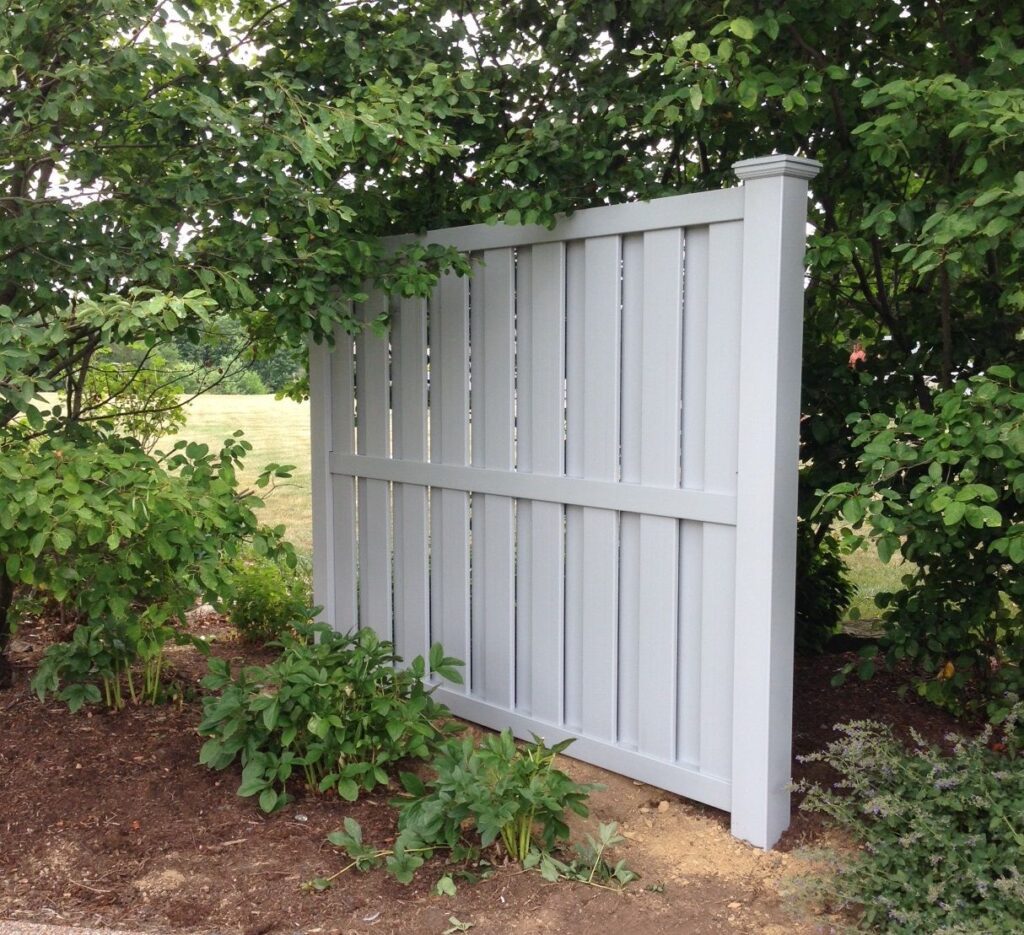
The shadowbox design similar to the existing wooden fences. They allow the wind to blow through the slats and will have less damage during stormy weather and hurricanes.
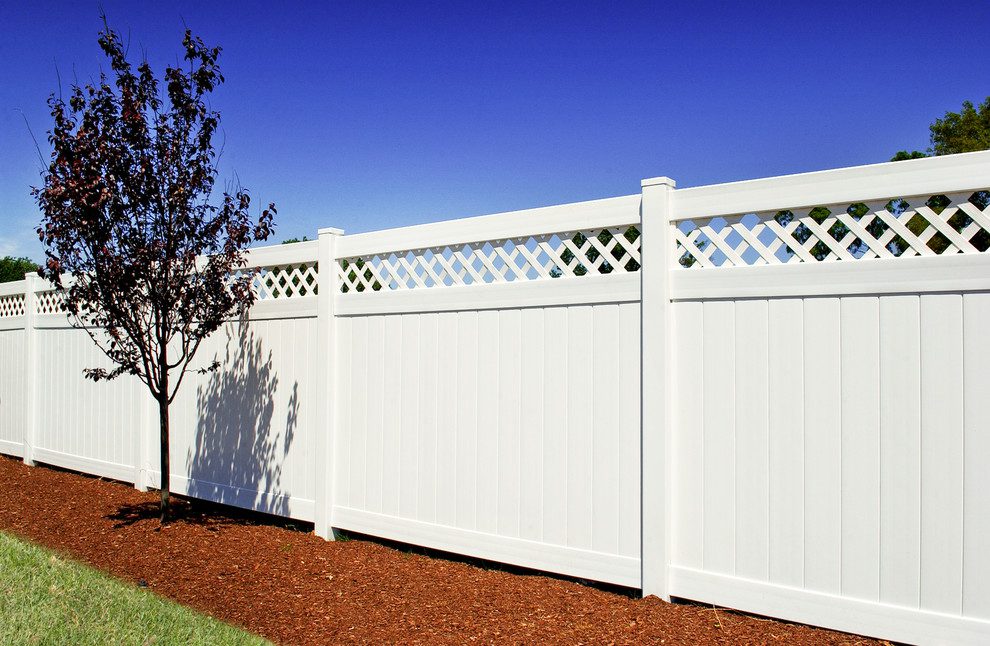
The Lattice work top design – less expensive but doesn’t let the breeze flow through like the shadow box as above.
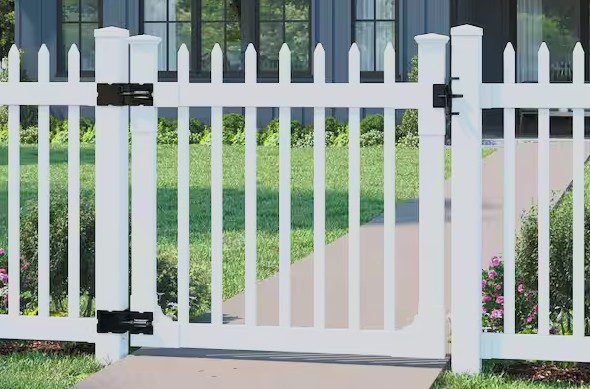
The picket fence design is less expensive as there is less material however if you have ever seen the stuff that people keep on their front patio you will not want something that you can see through.
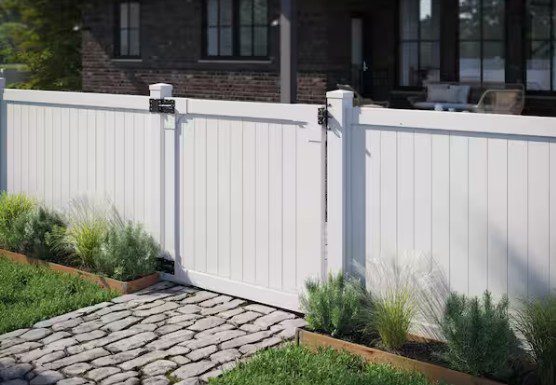
This 4-foot-high fence in the front patio areas will conceal anything stored behind them and also replace all the gates that have been removed over the years. New gates with new hardware that are manufactured to support the gates over time. The posts on either side of the gates will be reinforced with aluminum on the inside to support the gates through the years. No more hanging or sagging gates. The lower profile at only 4 feet tall should allow wind to pass over without as much damage from storms.
Poll –